KEEP VICTORIA FALLS WILD

KEEP VICTORIA FALLS WILD
Save Victoria Falls from over-development - click to visit site - www.keepvictoriafallswild.com
Showing posts with label invasive species. Show all posts

Friday, 31 May 2013

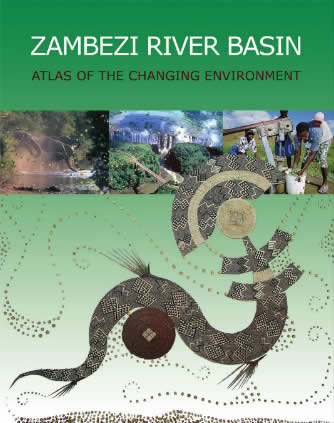
Major Project Maps Change in Zambezi Basin


A major report has been published (available online here) looking at landuse and wider environmental change across the Zambezi River catchment, and highlights the many pressures facing the environmental integrity of the region.
The Zambezi River Basin Atlas of the Changing Environment looks at climate and human pressures on natural resources across the river basin, which encompasses part of eight countries — Angola, Botswana, Malawi, Mozambique, Namibia, the United Republic of Tanzania, Zambia and Zimbabwe.
The Atlas uses satellite images, high resolution photographs, illustrative text and graphics to investigate various issues in the Zambezi basin, from use of water and other natural resources, as well as socio-economic and cultural aspects, and identifies climate change and population growth as major drivers of environmental change.
Satellite images show that the basin has undergone major environmental changes in the past 20 years. These include land degradation, loss of forests, expansion of urban and mining areas as well as the spread of alien plant species. According to the Atlas, the population of the basin in 1998 was 31.7 million compared to an estimated 40 million in 2008, with 7.5 million people living in urban centres.
Most countries in the basin are urbanizing rapidly, putting pressure on finite resources. The Atlas illustrates the deforestation of large areas surrounding Lilongwe in Malawi, among others, due to the high demand for firewood and land for farming by the growing population.
Mining is a major economic activity in the basin and satellite images reveal striking land-use changes as a result of mining activities, notably in Zambia. The revival of copper mining at Kanshanshi and Lumwana mines in Solwezi in north-western Zambia has led to a population influx, resulting in the rapid but haphazard expansion of the town. As a result, surrounding forested areas have been cleared for firewood and peri-urban farming.
Sub-basins such as the Luangwa River, Lake Kariba, and the Kafue and Kabompo rivers also have high concentrations of mining operations, contributing to water pollution in the Zambezi river. In addition, highly urbanized sub-basins such as the Kafue and Manyame are discharging waste into the Zambezi river system. The use of fertilizers and agrochemicals are contributing to the growth of harmful aquatic plants. Water hyacinth growth is a problem throughout the basin, and areas particularly affected include the Kafue Flats in Zambia, Lower Shire in Malawi, Lake Kariba between Zambia.
Zambezi River Basin Atlas of the Changing Environment, the first of its kind in southern Africa, is a collaborative initiative with the objective of providing scientific evidence about changes that are taking place in the environment. The Atlas is being produced for the Southern African Development Community (SADC) Water Division, the Interim Secretariat of the Zambezi Watercourse Commission (ZAMCOM), and Zambezi River Basin stakeholders, by the Southern African Research and Documentation Centre (SARDC) through its environment institute, the I. Musokotwane Environment Resource Centre for Southern Africa (IMERCSA) and GRID-Arendal, both collaborating centres of the United Nations Environment Programme (UNEP).
The Atlas is available online to download here.
Original source: ZAMCOM: Changing the Environment in the Zambezi River Basin


Thursday, 21 February 2013

Victoria Falls World Heritage Site Update

Bit of catching up with the state of play regarding official reporting on the Victoria Falls World Heritage Site, joint listed by Zambia and Zimbabwe.
In February 2012 Zambia and Zimbabwe submitted a comprehensive report covering progress made during the two-year period since the last report. The report addressed the specific issues raised previously (following the previous report) and provides a general update on the implementation of measures taken to satisfy the 2006 mission recommendations.
The reports detail joint management meetings and progress over the period, including work towards establishment of 57 benchmarks and indicators that will be used to monitor progress in maintaining the Outstanding Universal Value and ecological integrity of the site. A comprehensive monitoring plan for the site was planned to be submitted by December 2012.
Specific issues highlighted in the online summary include:
Control of invasive species
One major management issue is control of invaise non-native plants. Parties report an intensification of efforts to control invasive species in the falls area using mechanical, chemical and biological methods. A total of 2.5 ha of land was cleared of the invasive weed Lantana camara, but note that they face significant challenges due to its rapid regeneration. The slopes of the gorges are now becoming infested and control work is dependent on State Party funding, which is inadequate.
Tourism development and regulation
The Parties reported an increase in visitor numbers over the 2009 figure, with a combined total of 232,400 visitors in 2010 and 215,380 during the first 11 months of 2011.
On the Zimbabwean side it was reported that a new helipad has been completed away from the falls so that helicopter operators can be relocated and noise pollution reduced. Both State Parties have upgraded their visitor centres and installed electronic ticketing equipment. Other visitor facilities have been improved on the Zimbabwe side, with a new ticket office and upgrading of ablution facilities.
Zambia submitted a new project brief for a tethered balloon. The project brief for this proposal notes that the new location is south of the Eastern Cataract, meaning that the balloon would not appear in the viewing corridor of visitors viewing the Falls from the Zambian side.
Other conservation issues of concern – water abstraction, poaching, pollution, and urban development
An agreement has been reached to reduce water abstraction for hydro-electric power generation by the Zambia Electricity Supply Corporation (ZESCO), which entails a 40% reduction in power generation and correspondingly stronger flow of water over the falls for five hours daily during the critical dry months, when water flows in the Zambezi drop below 400 m³/s. This is intended to ensure that water flows over the eastern cataract (on the Zambian side of the falls) during these peak visitor viewing hours. However, the State Party notes that this measure will not be implemented until the power station is connected to the national power grid, and that there will be no reduction in power generation if the water flows in the Zambezi drop below 200 m³/s.
The report further noted that pollution arising from effluent discharge from urban areas on either side of the border is being addressed. Sewerage ponds on the Zimbabwe side have been rehabilitated, but those on the Zambia side are still reported to be leaking. Mitigation measures have been put in place to address pollution from boat sewage, such as the installation of chemical toilets on all boats operating on the Zambezi river.
Conclusions
'The World Heritage Centre and IUCN note that despite some improvements, helicopter use and noise remains a significant concern that impacts on the quality of experience of visitors to the property and requires continued regulation and management. Furthermore, after reviewing the project brief, the World Heritage Centre and IUCN consider that the new location of the tethered balloon does not mitigate the visual impacts of the balloon on the view from the Zimbabwean side or from river cruises above the falls. They recommend that the Committee recall its Decision 34 COM 7B.6, which re-iterated that any tethered balloon projects close to the property would adversely impact its integrity because, when raised, the balloon is likely to appear within the viewing corridor of the Falls.'
'The World Heritage Centre and IUCN note the measures taken to halt any furher development of hotels and other tourist facilities on the river banks and islands; to reduce noise and river pollution and to maintain the site’s visual integrity and natural unspoilt beauty. They also note that the State Party of Zambia has submitted three environmental project briefs for a five passenger tethered balloon, an amphicoach, and a tent sanctuary and spa lodge facility before taking a decision on these projects, as required by the Operational Guidelines.'
'However, with regards to the amphicoach project, the environmental project brief submitted does not currenty adequately address mitigation of visual and physical impacts. Considering the spa project, the brief should include a limit to the height of the tents and other infrastructure associated to the spa lodge, and specify measures to avoid impacts of the spa on the view from the Zimbabwe side of the river. Furthermore, regarding the spa site, adequate measures should be taken to avoid erosion of top soil within and around the spa lodge site, as well as silt run-off into the river or associated streams as a result of surface drainage of rainwater. While it is possible to assess the impacts of individual development projects on the property, the cumulative effects of a range of tourism related developments will together impact on the property’s Outstanding Universal Value. The World Heritage Centre and IUCN note historical concerns regarding the visual impact of high structures and recommend that the Committee request the State Party that a Strategic Environmental Assessment (SEA) of development within the property and in its vicinity be conducted, in order to protect the Outstanding Universal Value of the property, including its aesthetic value and the related conditions of integrity.'
'The World Heritage Centre and IUCN note the loss of revenue (estimated at USD 218,160 annually) that would be involved in reducing the amount of water diverted from the falls to generate electricity. They however note that the ZESCO plant, as reported by the State Party, requires 175 m3/s to operate at full capacity, which involves abstraction of 44-87% of typical dry-season flows over the September-January period. This level of water abstraction is clearly affecting the visual impact and aesthetic value of the property (the basis of its inscription on the World Heritage List under criterion (vii)), and may be having other long-term impacts such as degradation of the adjacent rainforest as a result of reduced spray at critical times. The World Heritage Centre and IUCN recommend that the Committee urge the State Party of Zambia to consider further voluntary reductions in dry-season water abstraction so as to fully maintain the Outstanding Universal Value of the property.'
Source: UNESCO Victoria Falls


Wednesday, 23 January 2013

A myna problem?

From the Zambezi Traveller, June 2012
The common or Indian myna, Acridotheres tristis, a controversial non indigenous species in southern Africa, has been recorded breeding in Hwange National Park, Zimbabwe, generating much debate among ornithologists.
Read more: Zambezi Traveller - A myna problem?
Photo credit: Zambezi Traveller