Eight elephants have died so far this year from eating too much plastic waste at the Victoria Falls dumpsite, according to Environment Africa.
THE Victoria Falls receives over one million visitors each year, but the large quantity of waste left behind is beginning to kill the wildlife they come to see.
Eight elephants have died so far this year from eating too much plastic waste at the Victoria Falls dumpsite, according to Environment Africa, a local environment charity organisation.
Worried that the open dump could lead to more deaths, Environment Africa are now leading a campaign to raise $50 000 to help build a solar-powered fence around the site.
“The fence will surround the dumpsite and will not be harmful to the animals,” said Charlene Hewit, chief executive Environment Africa, by email.
“The electric fence will give them a shock.” It is not known how much distance the fence will cover.
But an electric fence of this nature will likely run on a potential energy of 5 000 volts, using heavy aluminium wire, says Trevor Shumbamhini, an electronics engineer.
It can work on two fronts, he says, — a solar-powered fence energiser with in-built battery, or one with a separate external battery, depending on circumstances. Both can supply power for extended periods when the sun is not shining. The energiser is an electric device that controls the amount of electrical shock sent through the fence from the power source, in this case, the battery.
With that much energy, the electric fence is built not so much as to harm the animal but to send a little warning shock.
Shocked once, the animal begins to recognise the danger around a specific area to avoid a second dance.
By using solar, Environment Africa have circumvented Zimbabwe’s existing sharp power shortages. But there is still one more problem of which to be wary.
“One of the issues with the fence that has to be taken care of is that people do not come and steel the wire and use that for snares for poaching,” warned Mrs Hewit.
“We have linked up with the Victoria Falls Anti-Poaching Unit (VAPU), who are going to assist with the anti-poaching around the area and protection of the fence.”
Waste nightmare
Like much of urban Zimbabwe, the Victoria Falls has experienced rapid development and population growth.
Its population has risen three-fold in the past two decades to 33 000 in 2012, according to Government data.
And again like everyone else, the town has struggled to manage the 3 300 tonnes of solid waste generated each year by its residents, businesses and the millions of tourists that flock to see the world famous waterfall, Victoria Falls, and to see the abundant wildlife. Across Zimbabwe, towns and cities produce over 614 000 tonnes of solid waste annually, a quarter of it plastic, says the Environmental Management Agency.
Only 52 percent of the waste is ever collected and properly disposed by municipalities. The rest is either burnt, buried underground or dumped anywhere. In Victoria Falls, the dumping congregates at an open vast space on the edge of town. And with its diversity of waste — food left overs, metal cans, plastic packaging etc — the dump has become an animal’s paradise, conservationists say.
Food comes easy at this garbage rendezvous, like manna from heaven. Several animal species — from baboons to elephants — forage there.
“There are resident elephants who have been patrolling around Victoria Falls for some time now,” said Mrs Hewit.
“They find it easier to come and eat at the dumpsite. They come during the evenings mostly.”
The Victoria Falls municipality has dismissed the claims as false.
“We are not aware of elephants that have died in the Victoria Falls from eating plastic from the town’s dumpsite,” charged Lot Syatimbula, the town’s director for housing and community services, by telephone.
“Does an elephant eat plastic at all? Where exactly did these deaths occur, when? Victoria Falls is a small town we would know even when one elephant dies. Some of these non-governmental organisation tend to be sensational.”
Death within days
It is not easy to put down a 6-tonne adult elephant, but plastic does that within days if consumed to excess, according to veterinary experts.
From fruit to tree leaves to tree bark, the elephant diet is diverse — and so is the strength of its digestive system — but plastic isn’t just an option, they say.
“I have yet to actually do a post-mortem on any of the elephants . . . but if the plastic consumed is very huge, death could occur within a few days, possibly a week,” explained Dr Chris Foggin, a veterinary surgeon with the Victoria Falls Wildlife Trust.
“If it is accumulation of large numbers of small pieces of plastic that somehow got together to make a big piece of obstruction in the intestines, it (death) could take months.”
Caroline Washaya Moyo, spokesperson for the Zimbabwe Parks and Wildlife Authority, did not respond to questions emailed to her.
There are more than 80 000 elephants in Zimbabwe — one of the world’s biggest herd— with over 50 percent of the endangered animal concentrated in the Hwange-Victoria Falls area, authorities say.
As Environment Africa presses on with its electric fence plan, with a website to mobilise funding already running, the Victoria Falls municipality has also begun to look at better ways of managing its waste.
According to Mr Syatimbula, the town is finalising tenders for the construction of an 8-cell landfill.
The mandatory Environmental Impact Assessments — evaluations of a project’s potential ecological impact — have been completed, he said.
Dumpsites are open areas where waste is disposed randomly, but the landfill is designed and monitored with care. With the landfill, the ground is usually opened up on a huge area and filled up with trash.
But until this happens, the Victoria Falls, one of the world’s seven natural wonders, will likely run the risk of killing its own.
Source: Electric fence for Vic Falls dumpsite. . . 8 elephants dead from consuming plastics (14/03/16)

KEEP VICTORIA FALLS WILD

Save Victoria Falls from over-development - click to visit site - www.keepvictoriafallswild.com
Tuesday, 15 March 2016

Monday, 14 March 2016
6 elephants die from eating plastic bags in Vic Falls
(14th March 2016)
Victoria Falls, Zimbabwe – At least 6 elephants have died in the last 18 months in Zimbabwe's Victoria Falls National Park after swallowing plastic bags found on a dump site, a local conservationist says.


Trevor Lane of the Bhejane Trust, which operates in Victoria Falls and Hwange National Park, said elephants frequently forage in the municipal dump at Victoria Falls. The animals eat "highly-scented" plastic bags (like bread bags) and then (hopefully) pass them out when they defecate.
"The whole park is littered with plastic [from elephant dung]," Lane told News24.
But not every plastic-eating elephant survives. The six known to have died in the last year to 18 months "ingested too much plastic. It actually killed them", he said.
"It must be a terribly agonising death," he added.
Lane is one of the brains behind the Victoria Falls Elefence project. Fundraisers hope to raise US$50 000 to build a solar-powered electric fence round the municipal dump to keep the elephants out.
A video has been uploaded to YouTube by the Elefence community showing the mountains of plastic at the dump and the elephants that forage there.
The Victoria Falls Wildlife Fund, which is part of the project, said in a post to Facebook last week, "Wildlife are often found eating out of the dump site and this has led to illness and death in different species including elephant."
Baboons scavenge in Victoria Falls municipal dump too but they are "far too clever" to swallow plastic, Lane said. "They just pick away at the rubbish," he said.
Source: 6 elephants die from eating plastic bags in Vic Falls (11/03/16)
Victoria Falls Anti-Poaching Unit Snares Ivory Dealers and over 300 Poachers
Anti-poaching teams in Victoria Falls have had a bumper year in the field, having captured three prominent ivory dealers and more than 300 poachers in 2015.
The Victoria Falls Anti-Poaching Unit (VFAPU), founded by conservationist Charles Brightman and hospitality group Africa Albida Tourism’s flagship property Victoria Falls Safari Lodge, were responsible for the busts.
The unit, which employs 17 scouts, works closely with National Parks and Wildlife Management and the Zimbabwe Republic Police to conserve Zimbabwe’s valuable wildlife resources.
The ivory dealers, all Victoria Falls residents, were caught in January last year with nearly 10kg of elephant tusks during undercover operations, and each was sentenced to nine years in prison.
“VFAPU assists and funds a number of these types of operations each year, said Charles Brightman, VFAPU head of operations. “We helped in several cases where poachers were arrested for possession of cyanide, weapons and tusks.
“Recently a pangolin was rescued from two men attempting to sell it, and VFAPU assisted in this success,” Mr Brightman said.
Of the more than 300 poachers caught by VFAPU last year, 12 were mammal poachers, with the illegal bush meat trade – which results in 3.5 million tons of wildlife being consumed in central and southern Africa each year – an area of great concern, he said.
Four warthogs, three impala, two baboons, a zebra, a buffalo and a kudu were found poached within VFAPU’s operational area, a 50km radius of Victoria Falls.
“In one incident, VFAPU scouts located a poached buffalo which had been butchered in the Chamabonda area and were then able to track the spoor to a house in one of the Victoria Falls suburbs,” he said.
“A trap was set and two men were apprehended with fresh meat from the buffalo. They were recently sentenced to six months in jail.
Fortunately, VFAPU scouts were able to save three kudu and a warthog injured in poachers’ snares by darting, treating and releasing them back to the wild. Since VFAPU began operating in 1999, 183 mammals have been saved from a slow, painful death in this manner.
In addition, four people were caught selling game meat without correct permits, he said.
So far, VFAPU has removed more than 22,000 wire snares from its operational area, including 181 last year.
VFAPU scouts also put their tracking skills to use to locate five thieves who were tormenting Victoria Falls town residents. They were charged with housebreaking offences, and later sentenced.
Three fish poachers, as well as 14 people who illegally entered National Park’s land, were also apprehended by VFAPU last year.
“VFAPU’s successes wouldn’t be possible without joining forces with government authorities and working together, as well as public support – every donation, no matter how small helps,” Mr Brightman said. “I urge everyone to support anti-poaching efforts in any way can and wherever they can.”
Africa Albida Tourism chief executive Ross Kennedy said the contribution that VFAPU made to Victoria Falls community, tourism industry and surrounding area was immeasurable.
“No one should take for granted the dedication and commitment, hard work and passion displayed 365 days a year by Charles and the scouts,” said Kennedy.
VFAPU needs more, and regular, funding commitments from the Victoria Falls tourism industry,” he continued. “And, indeed, all who care for our wildlife and conservation, as VFAPU’s work and success is a beacon of positive change.”
Source: Victoria Falls Anti-Poaching Unit Snares Ivory Dealers and over 300 Poachers (10/03/16)
Innscor proposes to dispose of Shearwater
Innscor, one of Zimbabwe’s largest conglomerates, recently disposed of its Spar Retail franchise to improve focus on its core businesses.It has also proposed to sell-off its SPAR Zambia franchise and Shearwater, its tourism unit with operations in Zimbabwe, Zambia and Botswana.
Innscor Africa Limited registered a 23 percent increase in profits to $15,9 million in the six months to December 31, 2015 up from $12,9 recorded in the comparable period.
The company attributed the significant increase in profits to volume growth, efficient cost of sales and operating cost management.
Chairman Addington Chinake said revenue went up by two percent to $300,615 million, while operating profit surged by eight percent to $27,437 million over the comparative period.
“The group’s results were characterised by growth in volumes in all light manufacturing businesses, which however, were partially offset by the reduction in the average revenues per unit as the group made a decision to reduce prices to assist the customer in the difficult economic environment,” he said.
Innscor’s profit before tax grew by 18 percent in the period under review to $20,580 million and attributable profit grew by 65 percent to $9,651 million.
The group’s headline earnings per share (HEPS) on continuing operations grew 62 percent over the comparative period from 1,12 cents to 1,81 cents.
Chinake noted that Innscor’s capital expenditure on all businesses was reduced from $17,411 million in the 2014 financial year to $16,394 million during the period under review.
“Net borrowings have increased by $13,049 million to support capital expenditure, working capital investment in strategic inventory and the acquisition of Transerv resulting in net gearing of 17,21 percent,” he said.
The company, which recently unbundled and subsequently listed its quick service restaurant business, is also working on unbundling TV Sales & Home and Transerv.
Innscor declare an interim dividend of 0,30 cents.
Source: Innscor proposes to dispose of Shearwater (11/03/16)
Friday, 11 March 2016
Steam Train Trips Are Back in Victoria Falls
Taking off from the Victoria Falls Station in Zimbabwe, the Bushtracks Express has brought back the elegant and exciting trip to the Victoria Falls Bridge by Steam Train. The trips were launched on March 1st of this year and are run on a regular schedule every Tuesday and Friday.
The train's journey starts off at the station in the late afternoon, and makes its way into the Victoria Falls Park, where one might spot some game (depending on the season). From there, guests are taken to the Victoria Falls Bridge where they can disembark for some sight-seeing, or stay in the air-conditioned train and enjoy the drinks and the view. The variety of canapés and beverages are provided by the Victoria Falls Hotel, along with premium beverages which are not included on the ticket, but can be purchased on the train.
After sunset, the train slowly makes its way back through the park to the Victoria Falls Station.
"The train offers discerning guests the ultimate pre-dinner experience going back in time to the age of Steam train travel" - Bushtracks Africa
Bushtracks Africa also offer dinner runs from the Zambian side of the border, in the Royal Livingstone Express.
Source: Steam Train Trips Are Back in Victoria Falls (08/03/16)
Tuesday, 8 March 2016
Zimbabwe pioneers green tourism in Africa
Leonard Ncube Victoria Falls Reporter
ZIMBABWE has become the first country in Africa to embrace the green tourism concept under which players are expected to harness environmentally friendly approaches. The idea was mooted in 2014 at the Hlanganani/Sanganai Expo in Harare after which the government implored the tourism sector to start implementing the project.
This followed recommendations from the United Nations World Tourism Organisation (UNWTO), to which Zimbabwe is a member, for tourism players to start programmes that sustain green tourism.
The pilot project was launched in Victoria Falls on Wednesday last week where 13 hotels and lodges received certificates for going green by embracing environment friendly practices.
Participating hotels and lodges-Bayethe Lodge, Cresta Sprayview, Ilala Lodge, Pioneers Camp, Stanley and Livingstone, Elephant Camp, Victoria Falls Hotel, Victoria Falls Safari Lodge, Vintage Camp, Zambezi Sands, Ivory and Khulu Lodge and Somalisa Camps are in Hwange and Victoria Falls.
Officially launching the project, Permanent Secretary in the Ministry of Tourism and Hospitality Industry, Florence Nhekairo, said at the moment the programme was voluntary but operators would in the next five years be compelled to comply with green tourism before they could be registered to operate in the country.
Nhekairo said the launch of green tourism marked a great development in the history of tourism in Zimbabwe. “The country finally implements green tourism from the seeds sown at Hlanganani/Sanganai Expo in 2014.
“The UNWTO in 1993 noted that tourism should improve the quality of life of host community and also promote high quality expectation of the visitor,” she said. The Permanent Secretary said the concept was meant to reduce business operational costs.
“For now it’s voluntary but in the next five years for a business to be registered there would be need for compliance with green technology. “Let’s all play our part in reducing effects of climate change by using green technology that involves use of alternative energy and recyclable sources.
“About 71 percent of global travellers place importance on property hence the need for us to keep eco-friendly properties,” said Nhekairo. Victoria Falls Mayor Councillor Sifiso Mpofu said the project was a welcome development.
“As a municipality we’re committed to green environment and we believe this green tourism project will go a long way in ensuring that as a nation we conserve our surroundings. “We congratulate all hotels and lodges that participated and we would want to see inclusion of green social and cultural issues in the project,” said Clr Mpofu.
Green tourism is being spearheaded by development partners-Environment Africa and Green Tourism UK on behalf of the government. The team is working with other partners such as Parks and Wildlife Management Authority of Zimbabwe, Zimbabwe Tourism Authority and Zimbabwe Council of Tourism.
Their counterparts from Zambia attended the launch as the neighbouring country seeks to learn from Zimbabwe’s pioneer project. Programmes manager Andrea Nicholas said the project was an opportunity for Africa to show the world that it was environment friendly in the wake of climate change.
She said they started with hotels and lodges because they are easy to manage and the programme will spread to other sectors.
Source: Zimbabwe pioneers green tourism in Africa (07/03/16)
Monday, 7 March 2016
Ramboll picked for new check on Victoria Falls Bridge
Ramboll has won an international competition to carry out the latest service check on the historic Victoria Falls Bridge at the border between Zambia and Zimbabwe.
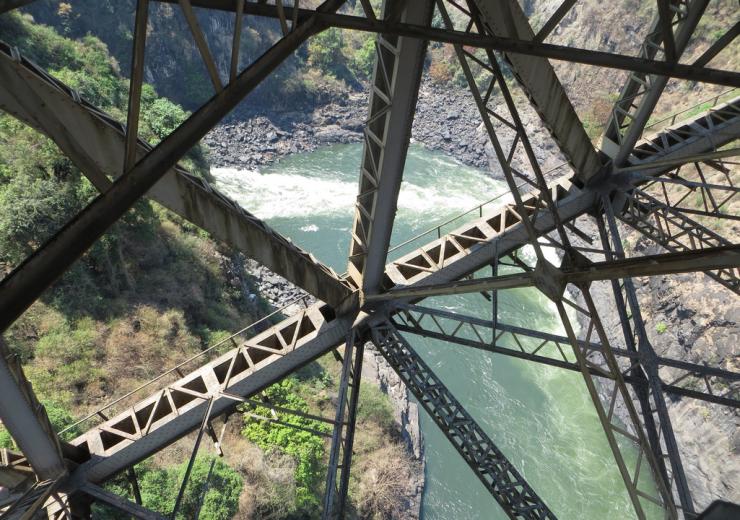
The riveted steel bridge was built more than a century ago. It has a parabolic arch design and its engineer was George Hobson. It was built in England by Cleveland Bridge & Engineering Company, shipped to the Mozambique port of Beira, and then carried by train to Victoria Falls. It took just 14 months to build and was opened in 1905 by Professor George Darwin, son of Charles Darwin. The bridge has a span of 156m across a 120m deep gorge where the Zambesi River marks the border between Zambia and Zimbabwe.
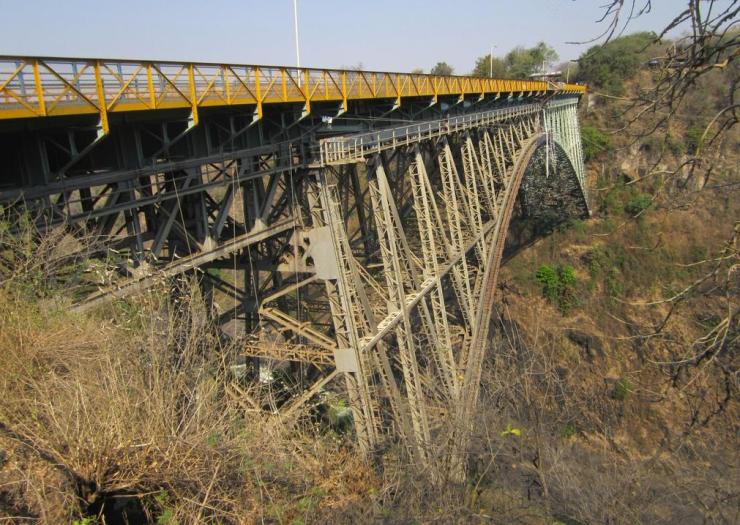 photos by Bjørn Nordgaard Lassen
Ramboll said that, even though the Victorian bridge design is exemplary, it needs regular service checks. In the bridge's 100th year, the World Bank appointed Ramboll to conduct a structural analysis. “We examined the bridge in detail and assessed the overall load capacity as satisfactory,” said Bjørn Nordgaard Lassen, chief consultant in Ramboll’s department for bridge and tunnel asset maintenance. “Considering the age of the bridge and the humid climate beneath the great waterfall, the structural state of the bridge remains impressive.”
Ramboll suggested some limited repair work aimed at extending the functional lifetime of the bridge for another 100 years. At the same time, it was recommended that regular check-ups should take place to identify any early signs of potential deterioration.
In an international competition, the owners of the bridge asked for a new check-up in preparation for the necessary repairs. Ramboll has won the new project and will use the calculation model and inspection data from 2005.
Source: Ramboll picked for new check on Victoria Falls Bridge (04/03/16)
Subscribe to:
Posts (Atom)